Suggerimenti Bibliografici per l'Industria Manifatturiera
Quelli che seguono sono i libri, in inglese (selezionati da Amazon.com), che suggerirei come materiale di lettura per personale dell'Industria Manifatturiera, allo scopo di comprendere meglio la filosofia del World Class Manufacturing. Basta fare click sul titolo di ciascun libro per accedere ad ulteriori dettagli (come forniti da Amazon.com).
The Machine That Changed the World: The Story of Lean Production
by James P. Womack, Daniel T. Jones, and Daniel Roos
When The Machine That Changed the World was first published in 1990, Toyota was half the size of General
Motors. Today Toyota is passing GM as the world's largest auto maker and is the most consistently
successful global enterprise of the past fifty years. This management classic was the first book to reveal
Toyota's lean production system that is the basis for its enduring success.
Now reissued with a new Foreword and Afterword, Machine contrasts two fundamentally different business
systems -- lean versus mass, two very different ways of thinking about how humans work together to create
value. Based on the largest and most thorough study ever undertaken of any industry -- MIT's five-year,
fourteen-country International Motor Vehicle Program -- this book describes the entire managerial system of
lean production.
Nearly twenty years ago, Womack, Jones, and Roos provided a comprehensive description of the entire lean
system. They exhaustively documented its advantages over the mass production model pioneered by
General Motors and predicted that lean production would eventually triumph. Indeed, they argued that it
would triumph not just in manufacturing but in every value-creating activity from health care to retail to
distribution.
Today The Machine That Changed the World provides enduring and essential guidance to managers and
leaders in every industry seeking to transform traditional enterprises into exemplars of lean success.
Lean Thinking : Banish Waste and Create Wealth in Your Corporation
James P. Womack, Daniel T. Jones
In the revised and updated edition of Lean Thinking: Banish Waste and Create Wealth in Your Corporation,
authors James P. Womack and Daniel T. Jones provide a thoughtful expansion upon their value-based
business system based on the Toyota model. Along the way they update their action plan in light of new
research and the increasing globalization of manufacturing, and they revisit some of their key case studies
(most of which still derive, however, from the automotive, aerospace, and other manufacturing industries).
The core of the lean model remains the same in the new edition. All businesses must define the "value" that
they produce as the product that best suits customer needs. The leaders must then identify and clarify the
"value stream," the nexus of actions to bring the product through problems solving, information management,
and physical transformation tasks. Next, "lean enterprise" lines up suppliers with this value stream. "Flow"
traces the product across departments. "Pull" then activates the flow as the business re-orients towards the
pull of the customer's needs. Finally, with the company reengineered towards its core value in a flow
process, the business re-orients towards "perfection," rooting out all the remaining muda (Japanese for
"waste") in the system.
Despite the authors' claims to "actionable principles for creating lasting value in any business during any
business conditions," the lean model is not demonstrated with broad applications in the service or retail
industries. But those manager's whose needs resonate with those described in the Lean Thinking case
studies will find a host of practical guidelines for streamlining their processes and achieving manufacturing
efficiencies.
Lean Solutions: How Companies and Customers Can Create Value and Wealth Together
by James P. Womack and Daniel T. Jones
American and European feelings towards Japanese business practices have varied dramatically through the
last few decades. In the late 1970s and 1980s, a wave of fear swept through many Western leaders as they
contemplated Japan's stunningly rapid rise from the ashes of World War II. Then more recently, as the
1990s and early 2000s saw stagflation gripping the Japanese economy, and knowledge-based innovation in
technology and financial services bringing unprecedented prosperity to many Western countries, a feeling of
vindication (and sometimes smugness) returned to those same corporate chieftains. Most recently, perhaps,
the pendulum of conventional wisdom has begun to swing back to a middle position, in between the
extremes of adulation and disdain: respect for the positive contributions of Japanese business culture,
without blind acceptance. It's with this spirit that the authors of Lean Solutions offer their insightful
observations about process design and service delivery in modern companies.
James Womack and Daniel Jones are well-recognized contributors to the lean-business movement. Lean
Solutions is the consultants' fifth book together, following earlier works like Lean Thinking and The Machine
That Changed the World, and springs as before from their keen interest in Japanese business methods and
philosophy. What compels them to write yet another book, though, given the well-established literature on
lean business?
The authors offer an intriguing description of their mission at the beginning of this latest book. Principles of
lean design have in fact been adopted by many Western businesses, they acknowledge, and manufacturing
quality has steadily risen as a result. Yet customers remain often dissatisfied with their experiences. The
cause? To Womack and Jones, the answer rests in a myopic application of lean business principles:
companies have successfully improved their manufacturing and product-development environments, but they
have not had a large enough view of the overall customer relationship, and of the need for leanness in all
aspects of companies' interactions with customers.
Put another way: in Lean Solutions, readers find a new and much broader conceptualization of how
lean-business methods--which, to be fair to Womack and Jones, have evolved so that they can claim a
global heritage as much as a Far Eastern one--might apply across entire customer experiences, rather than
just manufacturing processes. The structure of Lean Solutions centers on 6 requests that the authors believe
customers implicitly demand from their vendors: "Solve my problem completely; don't waste my time;
provide exactly what I want; deliver value where I want it; supply value when I want it; and reduce the number
of decisions I must make to solve my problems."
With a compelling mix of case studies, and illuminating thought experiments in industries ranging as widely
as shoe manufacturing, health care delivery, auto repair, and grocery shopping, Womack and Jones walk
readers through careful explanations of how lean thinking might be expanded beyond the factory floor to
broader business problems. Lean Solutions isn't for all readers. It rests on an appreciation of the large
cumulative effects that many small processes can have on business, and it requires patience from those
who want to learn the secrets of lean business.
Going Lean: How the Best Companies Apply Lean Manufacturing Principles to Shatter Uncertainty, Drive
Innovation, and Maximize Profits
by Stephen A. Ruffa
Going Lean sets aside the notion that efficient operations and powerful innovations are only possible when
business is steady and demand is growing. Instead, companies must learn that sudden shifts or
unpredictable conditions need not undermine their results. Led by a new breed of companies -Toyota,
Wal-Mart, and Southwest Airlines--a powerful, yet unexpected mindset is reshaping the rules for business
competitiveness. By using Lean Dynamics TM--based on the now-famous Toyota Production
System--companies everywhere can thrive in virtually any environment. In Going Lean, readers will learn how
to:
- become broadly effective in creating and sustaining value
- set a critical foundation for achieving sustained excellence
- identify sources of lag and create robust value streams that thrive in today's dynamic conditions
- describe the underlying techniques to maintain steady and predictable flow
- create a system based on "pull," or external demand that consistently introduces new innovation even during severe downturns
- strive for perfection
- deliver industry-leading returns
Lean Transformation: How to Change Your Business into a Lean Enterprise
by Bruce A. Henderson, Jorge L. Larco, and Stephen H. Martin
Known in manufacturing among those striving to maximize productivity and create pull-scheduling of
production as "the yellow book," Lean Transformation: How to Change Your Business into a Lean Enterprise
is used across the globe by companies as they switch to lean production and management by empowered
teams. Touted by lean production experts everywhere as practical, down-to-earth, and easy to read, it warns
of cultural issues that are almost certain to arise, and gives management step by step instructions as it
explains clearly in terms anyone can understand such concepts as continuous flow, value stream mapping,
kanban, kaizen, six sigma, just-in-time (JIT), techniques for converting to quick set-ups, and other pillars of
the Toyota Production System. Indeed, Toyota may have been the first, but Toyota is not the only company
that excels at lean manufacturing. Dell Computers provides another model of a successful lean enterprise as
do Harley-Davidson and Pella Windows. Learn why initial improvements of 40 percent in direct labor
productivity and a 50 percent reduction in the space required for manufacturing are routine when production
and assembly are converted to continuous flow. Lean Transformation is chock full of real life examples of
value stream mapping, how kanban can resolve material supply issues, how kaizen brainstorming can result
in startling improvements overnight, how just-in-time (JIT) frees mountains of money tied up in
work-in-progress, why six sigma quality needs to be built in and not inspected in, how bottlenecks can be
eliminated, kanban snafus spotted before they happen, and how instilling a championship mentality in
cross-functional teams can lead to increased productivity and continuous improvement that doesn't stop after
the initial kaizen event.
It doesn't take a genius to know that the low cost producer that meets customers "want" dates 99% of the
time yet carries only two days inventory has a tremendous competitive advantage. So put value stream
mapping, just-in-time (JIT), six sigma, kanban, kaizen, continuous flow, empowered teams, and all the other
techniques you'll learn about in Lean Transformation to work. Order a copy for everyone involved in your
transformation into a lean enterprise.
Creating a Lean Culture: Tools to Sustain Lean Conversions
by David Mann
Lean production has been proven unbeatable in organizing production operations, yet the majority of
attempts to implement lean end in disappointing results. The critical factor so often overlooked is that lean
implementation requires day-to-day, hour-by-hour management practices and skills that leaders in
conventional batch-and-queue environments are neither familiar nor comfortable with.
Creating a Lean Culture helps lean leaders succeed in their personal batch-to-lean transformation. It provides
a practical guide to implementing the missing links needed to sustain a lean implementation. Mann provides
critical guidance on developing and using the key elements of a lean management system, including: leader
standard work, visual controls, daily accountability processes, maintaining a process focus, managing key
HR issues, and much more. In addition, a questionnaire is included to help assess current management
practices and monitor progress.
Highlights: Distinguishes the much-discussed, abstract concept of "lean culture" from the concrete,
implementable practices of lean management. Describes and illustrates 4 key principles of lean
management: leader standard work; visual controls; daily accountability process, and discipline. Shows how
visual controls bring process focus to life, tie in lean's requirement for highly disciplined execution, and make
leaders' new jobs far easier to explain, model and evaluate. Moves beyond models and theories of lean
management to show how to implement the daily practices that are the key to implementing and sustaining
a lean transformation. Lots of case examples, figures and photographs.
Lean Performance ERP Project Management: Implementing the Virtual Lean Enterprise, Second Edition
by Brian J. Carroll
Lean thinking is too often narrowly focused on physical processes, causing serious shortcomings, which
limit Lean's substantial benefits. Revised to consider the emerging global economy, Lean Performance ERP
Project Management, Second Edition integrates strategy, people, process, and information technology into
a project management methodology that applies Lean Thinking to all processes. It leverages Lean principles,
tools, and practices to improve and then continuously improve management decision processes,
information/support processes, and their linkages to Lean physical processes.
New in the Second Edition:
- Provides project managers an overview of lean benefits and challenges to present to Lean Sponsors and
Lean Transformation Steering Committees
- Presents a strategy for ERP project managers dealing with Chinese-based manufacturing
- Includes a refreshed discussion of current events in the transition to lean in the global economy
- Discusses new developments such as e-kanban, Radio Frequency Identification (RFID), Customer TAKT,
and Operational TAKT
- Features a case study of the Lean Commerce system implemented by Toyota North America
Based on the author's practical management and consulting experience, Lean Performance ERP Project
Management: Implementing the Virtual Lean Enterprise clearly demonstrates that a lean tool kit requires the
participation from all departments of an organization, from product development to fulfillment.
The Goal: A Process of Ongoing Improvement
by Eliyahu M. Goldratt and Jeff Cox
Alex Rogo manages a failing manufacturing plant, and his marriage is on shaky ground due to his long work
hours. When his district manager tells him that profits must increase or the plant will be closed, Alex
realizes he needs help. He turns to Jonah, a former professor, whom Alex discovers is now a management
consultant (although Jonah's field is physics). With the help of the enigmatic Jonah and the plant staff, Alex
turns the plant around while at the same time abandoning many management principles he previously
thought were ironclad. This multivoiced presentation is lively and interesting and offers food for thought for
managers in any field. The performances are natural and unaffected, with sound effects to enhance the
illusion of reality. Although it is a novel, this title is more appropriate for business collections.
Theory of Constraints
by Eliyahu M. Goldratt
Theory of Constraints walks you through the crucial stages of a continuous program: the five steps of
focusing; the process of change; how to prove effect-cause-effect; and how to invent simple solutions to
complex problems. Equally important, the author reveals the devastating impact that an organization's
psychology can have on the process of improvements. Theory of Constraints is a crucial document for
understanding what it takes to achieve manufacturing breakthroughs.
About the Author
One of the world's most sought after business leaders - author and educator, Dr. Eli Goldratt. Eli Goldratt
had been described by Fortune Magazine as a "guru to industry" and by Business Week as a "genius." His
charismatic, stimulating, yet sometimes unconventional style has captured the attention of audiences
throughout the world. Eli is a true thinker who provokes others to think.
Eli Goldratt is the creator of the Theory of Constraints (TOC) and is the author of 8 books, including the
business best sellers The Goal, It's Not Luck, and Critical Chain. Goldratt's Theory of Constraints is used by
thousands of companies, and is taught in hundreds of colleges, universities, and business schools. His
books have sold over 3 million copies and have been translated into 23 languages. Goldratt's fascinating
work as an author, educator and business pioneer had resulted in the promulgation of TOC into many facets
of society and has transformed management thinking throughout the world.
In Search of Excellence : Lessons from America's Best-Run Companies
by Thomas Peters
.........Peters and Waterman studied more than 43 successful American companies. The companies specialized in a number of areas: consumer goods, high technology, and services. What he discovered was that regardless of how different each company was, they shared eight basic principles of management that anyone can use on their way to success........
The Fifth Discipline : The Art and Practice of the Learning Organization
by Peter M. Senge
Not only is the learning organization a new source of competitive advantage, it also offers a marvelously empowering approach to work, one which promises that, as Archimedes put it, "with a lever long enough... single-handed I can move the world....."
A Passion for Excellence: The Leadership Difference
by Nancy Austin and Thomas J Peters
A Passion For Excellence is the single most existing, inspiring, career-transforming book ever published for
people who want to get ahead. It takes you behind, the scenes in some of the most successful
organizations and analyzes what makes them distinctive.Here are real people, real companies, real
numbers. Here is what you need to know about the crucial elements of success: constant innovation,
staying in touch with customers, encouraging the contributions of everyone in the company, and maintaining
the integrity that is basic to leadership. Here are the secrets of building excellence.
Thriving on Chaos: Handbook for a Management Revolution
by Tom Peters
From Publishers Weekly
Addressing American industry's continuing decline in foreign and domestic markets, Peters (In Pursuit of
Excellence) here offers a detailed plan for unstructured business activity in which some readers will see not
only chaos but anarchy. Nevertheless, the author's perception of high quality as a determining consumer
motivation and his radical recipe for achieving it are persuasive. Noting that smaller service-oriented
businesses like Federal Express prosper while mammoth GE and GM falter, Peters would largely eliminate
top-heavy management superstructures in favor of creative worker involvement and customer participation,
with supervisors on hand to encourage. This textbook cites dozens of specific business situations and
person-to-person responses in support of its step-by-step instructions for turning a failing enterprise aroundif
those involved can act fast. 150,000 first printing; Fortune Book Club main selection.
From Library Journal
In contrast to the mass of oversimplified business survival manuals, this one justifies itself. After
demonstrating in his previous books ( In Search of Excellence , with Robert Waterman, and A Passion for
Excellence ) what he calls the "nice-to-do" in order for an organization to achieve success, Peters now
proposes the "must-do" to survive in explosively changing times. His 45 "prescriptions" for survival boil down
to enlightened leadership through innovation and flexibility in management style and organizational structure.
Essential. A.J. Anderson, G . S.L . I . S . , Simmons Coll., Boston. Copyright 1987 Reed Business Information, Inc.
Reengineering the Corporation : A Manifesto for Business Revolution
by Michael Hammer and James Champy
An important book that describes the principles behind a new and systematic approach to structuring and managing work. . . Whether they are chief executives, functional executives, or professionals, decision makers need to read this book....
Assessing Business Excellence : A Guide to Self-Assessment
by Steve Tanner
......presents a strategic framework for business excellence and total quality management and shows how you can be actively involved in continuous improvement by systematically reviewing your business activities and results against holistic business excellence frameworks.
The Tipping Point: How Little Things Can Make a Big Difference
by Malcolm Gladwell
"The best way to understand the dramatic transformation of unknown books into bestsellers, or the rise of
teenage smoking, or the phenomena of word of mouth or any number of the other mysterious changes that
mark everyday life," writes Malcolm Gladwell, "is to think of them as epidemics. Ideas and products and
messages and behaviors spread just like viruses do." Although anyone familiar with the theory of memetics
will recognize this concept, Gladwell's The Tipping Point has quite a few interesting twists on the subject.
For example, Paul Revere was able to galvanize the forces of resistance so effectively in part because he
was what Gladwell calls a "Connector": he knew just about everybody, particularly the revolutionary leaders
in each of the towns that he rode through. But Revere "wasn't just the man with the biggest Rolodex in
colonial Boston," he was also a "Maven" who gathered extensive information about the British. He knew
what was going on and he knew exactly whom to tell. The phenomenon continues to this day--think of how
often you've received information in an e-mail message that had been forwarded at least half a dozen times
before reaching you.
Gladwell develops these and other concepts (such as the "stickiness" of ideas or the effect of population
size on information dispersal) through simple, clear explanations and entertainingly illustrative anecdotes,
such as comparing the pedagogical methods of Sesame Street and Blue's Clues, or explaining why it would
be even easier to play Six Degrees of Kevin Bacon with the actor Rod Steiger. Although some readers may
find the transitional passages between chapters hold their hands a little too tightly, and Gladwell's closing
invocation of the possibilities of social engineering sketchy, even chilling, The Tipping Point is one of the
most effective books on science for a general audience in ages. It seems inevitable that "tipping point," like
"future shock" or "chaos theory," will soon become one of those ideas that everybody knows--or at least
knows by name.
From Publishers Weekly
The premise of this facile piece of pop sociology has built-in appeal: little changes can have big effects;
when small numbers of people start behaving differently, that behavior can ripple outward until a critical mass
or "tipping point" is reached, changing the world. Gladwell's thesis that ideas, products, messages and
behaviors "spread just like viruses do" remains a metaphor as he follows the growth of "word-of-mouth
epidemics" triggered with the help of three pivotal types. These are Connectors, sociable personalities who
bring people together; Mavens, who like to pass along knowledge; and Salesmen, adept at persuading the
unenlightened. (Paul Revere, for example, was a Maven and a Connector). Gladwell's applications of his
"tipping point" concept to current phenomena--such as the drop in violent crime in New York, the rebirth of
Hush Puppies suede shoes as a suburban mall favorite, teenage suicide patterns and the efficiency of small
work units--may arouse controversy. For example, many parents may be alarmed at his advice on drugs:
since teenagers' experimentation with drugs, including cocaine, seldom leads to hardcore use, he contends,
"We have to stop fighting this kind of experimentation. We have to accept it and even embrace it." While it
offers a smorgasbord of intriguing snippets summarizing research on topics such as conversational patterns,
infants' crib talk, judging other people's character, cheating habits in schoolchildren, memory sharing among
families or couples, and the dehumanizing effects of prisons, this volume betrays its roots as a series of
articles for the New Yorker, where Gladwell is a staff writer: his trendy material feels bloated and
insubstantial in book form. Agent, Tina Bennett of Janklow & Nesbit. Major ad/promo. (Mar.). Copyright 2000 Reed Business Information, Inc.
The Benchmarking Workbook: Adapting the Best Practices for Performance Improvement
by Gregory H. Watson
Managers today need benchmarking to anticipate trends and maintain competitive advantage. This practical workbook shows you how to do your own benchmarking study. Watson's discussion includes a case study that takes you through each step of the benchmarking process, raises thought-provoking questions, and provides examples of how to use forms for a benchmarking study.
Benchmarking-Theory and Practice
by Asbjorn Rolstadas
This book contains a collection of papers presented at the IFIP workshop on Benchmarking held in Trondheim, Norway, in June 1994. Most books available on the market tend to cover the basic theory of benchmarking. However, since this book is based on recent research papers it focuses more on presenting the latest trends within the field of benchmarking. The contributors range from experienced industrial benchmarkers to academic researchers within benchmarking, TQM and other related areas. The papers in the book are grouped into five Parts: management issues, modelling, performance measurements, tools and techniques, and applications. In addition, a set of shorter position papers is included. Finally, reports from three sessions of group work taking place at the workshop describe the major findings from the event. The group work sessions focus on three areas: how to implement benchmarking; modelling for benchmarking; and performance indicators. Lecturers and researchers in the areas of industrial engineering, quality management and business development, and middle and higher management in business or technology-oriented positions, will find this book invaluable.
Value Engineering : A Blueprint
by James Brown
......explains how value engineering, or value analysis, works and why it is a good idea. It is used to identify and apply cost-saving techniques throughout the life cycle of a product, from design and development to purchasing and manufacturing.
Value Engineering : Practical Applications...for Design, Construction, Maintenance & Operations
by Alphonse D. Isola
.....a complete system for understanding and conducting Value Engineering and Life Cycle Costing Studies - for design, construction, and facilities operation. Along with step-by-step instructional chapters, readers get seven case studies on major facility types, with currently applicable data and examples.
Product Assurance Principles : Integrating Design Assurance and Quality Assurance
by Eugene R. Carrubba and Ronald D. Gordon
.....this authoritative book is the first to clearly explain the ways in which the various disciplines within product quality assurance interact to achieve product integrity. It thoroughly examines the two major branches of assurance science and their relationship to design, testing, manufacturing, and application. And it offers both an in-depth treatment of principles-and a valuable overview of quality assurance management approaches and technical tools.......
World Class Manufacturing - The Next Decade : Building Power, Strength, and Value
by Richard J. Schonberger
.....rather than financial indicators, two key measures consistently correlate with a company's strength. One, inventory turnover, is easy to measure. The other, customer satisfaction, is not. Schonberger developed 16 principles of "customer-focused, employee-driven, data-based performance" that companies can use to "score" themselves and evaluate their ability to satisfy the customer.
Attaining Manufacturing Excellence : Just-In-Time, Total Quality, Total People Involement
by Robert W. Hall
Excellent One-Stop Reading of Best Manufacturing Concepts/Practices. Robert Hall has scored a perfect 10 in terms of capturing JIT, TQM, Continuous Improvement, ERP all within the confines of one book. His style of writing is really absorbing. If you want to get a taste of all the proven manufacturing concepts and practices, then this book serves as a one-stop reading.
The Idea Book : Improvement Through Tei/Total Employee Involvement
by Japan Human Relations Association
At last, a book showing how to create Total Employee Involvement (TEI) and get hundreds of ideas from each employee every year to improve every aspect of your organization. Gathering improvement ideas from your entire workforce is a must for global competitiveness. The Idea Book, heavily illustrated, is a hands-on teaching tool for workers and supervisors to refer to again and again. Perfect for study groups, too.
Manufacturing in the Nineties: How to Become a Mean, Lean, World-Class Competitor
by Harold J. Steudel and Paul Desruelle
....shows how simple, affordable strategies can transform traditional manufacturing organizations into world-class competitors. Explains how to implement ten integrated components of World Class Manufacturing for rapid and continuous improvement in product quality and manufacturing productivity.
Implementing World Class Manufacturing - Shop Floor Manual
by Madelyn Watson
This is a "hands-on, how-to" guide to making significant improvements in a manufacturing plant. Uniquely written in a step-by-step format for both managers and operators, Implementing World Class Manufacturing allows everyone in a facility to participate in making the business the best at what it does - now and in the future.
Implementing World Class Manufacturing, Second Edition (Includes Lean Enterprise)
by Larry Rubrich, Mattie Watson
Written for both machine operators and managers, Implementing World Class Manufacturing - 2nd Edition,
by Larry Rubrich and Mattie Watson, allows everyone in your facility to participate in making your business
the best at what you do - now and in the future. In our Second Edition, the application of the waste
elimination techniques of Lean and World Class Manufacturing have been expanded to include all parts of
manufacturing businesses (the office also) and to all types of business in general. This shop floor manual
teaches leadership, empowerment, and the advanced manufacturing techniques required to secure your
future, today!
From the Publisher
The goal of implementing Lean/World Class Enterprise is to improve and grow American businesses by
making them globally competitive.
In the Second Edition, the application of the waste elimination techniques of Lean/World Class
Manufacturing have been expanded to include all parts of a businesses (the office also) and to all types of
business in general.
The Second Edition retains all the World Class information from the First Edition:
1) Why Implement World Class Manufacturing (WCM) - proof of the need to change
2) Implementation Roadblocks You Will Encounter
3) Tuning the implementation to Your Facility
4) 5S - paving the approach to WCM
5) Team Building - unleashing the power of your workforce
6) Total Productive Maintenance - improving quality, productivity, and delivery through equipment reliability
7) Manufacturing Cells - one piece flow and the key to employee empowerment and ownership
8) Setup Reduction - reducing product delivery lead-times and improving your manufacturing capacity
9) Kanbans - automating the inventory replenishment cycle
10) Kaizen - continuous improvement and kaizen events
Plus it adds:
· Identifying Office Value-Added Activities · Identifying Waste in the Office · 5S for the Office · Value Stream
Mapping (VSM) for the Enterprise · Office Cell Design · Office and Enterprise Kanbans
And many additional visuals! This is a "hands-on, how-to" guide to making significant improvements in a
business. Uniquely written in a step-by-step format for everyone in the company, Implementing World Class
Manufacturing allows everyone in a facility to participate in making the business the best at what it does -
now and in the future.
Improving Production with Lean Thinking
by Javier Santos, Richard A. Wysk and Jose M. Torres
Unique coverage of manufacturing management techniques--complete with cases and real-world examples.
Improving Production with Lean Thinking picks up where other references on production processes leave off.
It is increasingly important to integrate and systematize lean thinking throughout production/manufacturing
and the supply chain because the market is becoming more competitive, products are becoming more
complex, and product life is getting shorter and shorter. With a practical focus, this book encompasses the
science and analytical background for improving manufacturing, control, and design. It covers specific
methodologies and tools for:
- Material flow and facilities layout, including a six step layout design process
- The design of cellular layouts
- Analyzing and improving equipment efficiency, including Poka-Yoke, motion study, maintenance, SMED,
and more
- Environmental improvements, including 5S implementation
With real-life case studies of successful European and American approaches to lean manufacturing, this
reference is ideal for engineers, managers, and researchers in manufacturing and production facilities as well
as students. It bridges the gap between production/manufacturing and supply chain techniques and provides
a detailed roadmap to improved factory performance.
Engineering Management : Creating and Managing World-Class Operations
by W. Dale Compton
The book describes in a detailed structure the elements surounding World Class Manufacturing. Through the different tools and strategies that the book explains, the manager of a manufacturing firm will be able to succeed in a very competitive world market.
Reinventing the Factory II : Managing the World Class Factory
by Roy L. Harmon
.....Harmon provides a "telltale" checklist to determine the need for factory reorganization. Is manufacturing lead time weeks and months instead of hours and days? Are quantities greater than customer needs? Are lift trucks giving components and materials a plant tour? Harmon offers specific solutions—"keys to success"—that can guarantee up to an 80 or 90 percent rate of improvement in operations.
Lean Manufacturing: A Plant Floor Guide
by David Stewart, Charles Robinson, John Allen
Written by the prominent consulting firm, Total Systems Development, Inc. (TSD), Lean Manufacturing: A
Plant Floor Guide is a complete inventory of the elements needed for successful implementation. It provides
an overview and a specific rationale for your initiative. It is an easy-to-digest reference to aspects of lean that
you may not have known about. It's a virtual toolbox of information that can be readily put to use on the plant
floor.
Internationally renowned editors John Allen, Charles Robinson, and David Stewart take readers on a
comprehensive, 'street-level' journey through lean implementation, from the seven wastes and flow processes
to developing a business case, using lean tools, and applying readers' newfound knowledge at greenfield and
brownfield sites. Specific chapters on mapping the value stream, policy deployment, the five-phase
implementation process, and problem-solving crystallize concepts with a pragmatic treatment. In addition,
the brownfield implementation chapter is a must.
Lean manufacturing is a powerful formula for eliminating waste, controlling quality and inventory, and
improving overall performance with the promise of huge early gains. This prescriptive guide offers real-world
solutions for implementing lean manufacturing in the enterprise, covering the technical, engineering, and
production aspects as well as the business culture concerns.
How To Implement Lean Manufacturing specifies the distinct order in which a company should implement
lean, and discusses common reasons why certain companies have failed in their implementations. Global
case studies help readers easily apply these situations to their own companies.
Running Today's Factory: A Proven Strategy for Lean Manufacturing
by Dale Davis
Lean manufacturing is not a collection of best practices from which manufacturers can pick and choose. It is
a production philosophy, a way of conceptualizing the manufacturing process from raw material to finished
goods and from design concept to customer satisfaction. The tremendous benefits of lean manufacturing are
realized when a lean strategy is used to support well-conceived business goals. Running Today's Factory
synthesizes lean manufacturing into a concise and coherent strategy for manufacturing managers. The
philosophies and principles presented are reinforced with examples from the author's research and
consulting work. Common obstacles and barriers that may be encountered in a lean environment are
discussed, and both intuitive and mathematical proofs are provided to illustrate why lean philosophies can
transform modern manufacturing. After reading Running Today's Factory, you'll understand why Lean is truly
a different way of thinking about manufacturing. Co-published by Society of Manufacturing Engineers and
Hanser Gardner.
Lean Manufacturing That Works: Powerful Tools for Dramatically Reducing Waste and Maximizing Profits
by Bill Carreira
"The one and only reason to go lean is to make more money", says Bill Carreira. Lean Manufacturing That
Works is the first book to bring all the principles of lean manufacturing to where they're needed most: the
shop floor and the people supervising daily operations. Engagingly written and easy to put to work, the book
features essential tools that can help streamline operations in any manufacturing environment.Section 1
presents a thorough overview of lean, with discussions of: cost and cash flow; velocity and lead time; what
waste is and how it affects both profit and customer satisfaction; how to quantify opportunities to become
more profitable; and how to use lean manufacturing to both complement and implement business
strategy.Section 2 gives step-by-step, dollar-by-dollar guidance on creating a lean process at virtually any
manufacturing company, from laying out processes to transitioning and training employees. There is also
valuable insight on establishing metrics and ensuring continuous improvement. Gaining specific, practical
knowledge with every page, the reader will move effortlessly through the book and return to the shop floor
with a workable plan for cutting waste and boosting profits.
"Is there one factor that allows some manufacturing companies to succeed while others fail? With production
a level playing field, with anyone able to purchase the same equipment and facilities, hire and train the same
qualified people, and purchase the same raw materials required to make a product—why is it that some
companies are consistently more competitive?
The simple answer lies in manufacturing technique: how you manage and balance people, materials, and
machines. And if your manufacturing organization is slow and inefficient, it's time to slim down.
Lean manufacturing allows manufacturers to reduce waste and maximize profits by adopting a philosophy
of operation that considers value from the perspective of the customer. Far from a dry explanation of theory
that simply looks good on paper, Lean Manufacturing That Works brings all the principles of lean
manufacturing to where they're needed most: the shop floor. Engagingly written and easy to put to work, the
book is specifically aimed at the people whose daily work involves the manufacturing floor, and it features
essential tools that can help streamline operations in any manufacturing environment.
A proven weight loss plan for your manufacturing environment, the lean strategy allows you to expend fewer
resources in delivering value to the customer. The results are growth through the taking of market share,
greater profitability, and increased opportunity and stability for your employees.
Lean Manufacturing That Works provides insights into this remarkable strategy and shows how to put it to
work immediately in your own operations.
In Section 1 -- the how -- Bill Carreira presents a thorough overview of lean manufacturing, with discussions
of cost and cash flow; velocity and lead time; what waste is and how it affects both profit and customer
satisfaction; how to quantify opportunities to become more profitable; and how to use lean manufacturing to
both complement and implement business strategy.
Moving onto the why behind lean manufacturing, Section 2 gives step-by-step, dollar-by-dollar guidance on
creating a lean process at virtually any manufacturing company, from laying out processes to transitioning
and training employees, with valuable information on establishing metrics and ensuring continuous
improvement.
The Lean Manufacturing Pocket Handbook is intended as a reference guide covering the terms, concepts
and techniques involved in Lean Manufacturing. It is written in an easy to understand fashion making it useful
to both the seasoned Professional and the Novice.
Toyota Production System: Beyond Large-Scale Production
by Taiichi Ohno
Here's the first information ever published in Japan on the Toyota production system (known as Just-In-Time
manufacturing). Here Ohno, who created JIT for Toyota, reveals the origins, daring innovations, and
ceaseless evolution of the Toyota system into a full management system. You'll learn how to manage JIT
from the man who invented it, and to create a winning JIT environment in your own manufacturing operation.
Continuous Flow Manufacturing
by Pierre C. Guerindon
This unique resource presents the fundamental principles of continuous flow manufacturing--furnishing a corporate strategy and set of operating rules that help create an environment where continuous flow manufacturing can flourish.
The Toyota Way
by Jeffrey Liker
How to speed up business processes, improve quality, and cut costs in any industry.
In factories around the world, Toyota consistently makes the highest-quality cars with the fewest defects of
any competing manufacturer, while using fewer man-hours, less on-hand inventory, and half the floor space
of its competitors. The Toyota Way is the first book for a general audience that explains the management
principles and business philosophy behind Toyota's worldwide reputation for quality and reliability.
Complete with profiles of organizations that have successfully adopted Toyota's principles, this book shows
managers in every industry how to improve business processes by:
Eliminating wasted time and resources
Building quality into workplace systems
Finding low-cost but reliable alternatives to expensive new technology
Producing in small quantities
Turning every employee into a qualitycontrol inspector
The Toyota Way Fieldbook
by Jeffrey Liker and David Meier
The Toyota Way Fieldbook is a companion to the international bestseller The Toyota Way. The Toyota Way
Fieldbook builds on the philosophical aspects of Toyota's operating systems by detailing the concepts and
providing practical examples for application that leaders need to bring Toyota's success-proven practices to
life in any organization. The Toyota Way Fieldbook will help other companies learn from Toyota and develop
systems that fit their unique cultures.
The book begins with a review of the principles of the Toyota Way through the 4Ps model—Philosophy,
Processes, People and Partners, and Problem Solving. Readers looking to learn from Toyota's lean systems
will be provided with the inside knowledge they need to:
- Define the companies purpose and develop a long-term philosophy
- Create value streams with connected flow, standardized work, and level production
- Build a culture to stop and fix problems
- Develop leaders who promote and support the system
- Find and develop exceptional people and partners
- Learn the meaning of true root cause problem solving
- Lead the change process and transform the total enterprise
The depth of detail provided draws on the authors combined experience of coaching and supporting
companies in lean transformation. Toyota experts at the Georgetown, Kentucky plant, formally trained David
Meier in TPS. Combined with Jeff Liker's extensive study of Toyota and his insightful knowledge the authors
have developed unique models and ideas to explain the true philosophies and principles of the Toyota
Production System.
The New Shop Floor Management : Empowering People for Continuous Improvement
by Kiyoshi Suzaki
.....Suzaki demonstrates how modern shop floor management techniques--focusing maximum energy on the front line--can lead to dramatic improvements in productivity, quality, cost, delivery, safety, and ultimately, competitive position.
Value Stream Management
by Don Tapping, Tom Luyster, Tom Shuker
Value stream management simplifies planning for lean implementation. It links the metrics and reporting
required by management with the tools needed on the manufacturing floor. In this volume, the authors stress
the importance of reaching beyond single-point kaizens to ensure a sustainable lean implementation
process. The central feature of this work is the value stream management storyboard, a tool representing an
eight-step process for lean implementation. The storyboard brings together people, tools, metrics, and
reporting into one visual document. The book is packaged with a CD containing a lean assessment tool and
a storyboard template, as well as charts, forms, and worksheets.
Learning to See: Value Stream Mapping to Add Value and Eliminate MUDA
by Mike Rother
When John Shook worked at Toyota he noticed that the senior experts on the Toyota Production System
often drew simple maps when on the shop floor. These maps showed the current physical flow of a product
family and the information flow for that product family as they wound through a complex facility making many
products.
"...it deserves a spot next to Learning to See." -- Peter Ward, Professor of Operations Management, Fisher
College of Business, Ohio State University
"...the next generation of waste identification and elimination is in the business support functions." -- Dr.
Ross E. Robson, Executive Director, Shingo Prize for Excellence in Manufacturing, Utah State University
"The Complete Lean Enterprise is an excellent tool to guide the enterprising manager to a new lean process
solution." -- Kent Sears, Vice President, Manufacturing Processes and Lean Implementation, General
Motors Corporation
"Their method is practical, pragmatic and can easily be transferred to others. ... This is the Rosetta stone
for VSM." -- Tom Berghan, Manager, Lean Systems, Esterline Korry
"The Complete Lean Enterprise is an excellent tool to guide the enterprising manager to a new lean process
solution. The step-by-step instructions are easy for the beginner to follow, and the lean examples, team
exercises, and mapping tips add a credible voice of experience to the manuscript. And, best of all, It works!"
Kent Sears, VP, Manufacturing Processes and Lean Implementation, GM 06/01/04
"Keyte and Locher have provided a valuable contribution for identifying strategic operational value streams for
administrative and office processes. They demonstrate that the next generation of waste identification and
elimination is in the business support functions." Dr. Ross E. Robson, Executive Director, Shingo Prize, Utah State University 06/01/04
"This book is a must-read for leaders struggling to remove waste, reduce time, and improve responsiveness
in white-collar processes. I expect to see well-worn copies of The Complete Lean Enterprise in offices
everywhere — it deserves a spot next to Learning to See." Peter Ward, Prof. of Operations Mgmt, Fisher College of Business 06/01/04
"Their method is practical, pragmatic and can easily be transferred to others. This is the book. This is the
Rosetta stone for VSM." Tom Berghan, Manager, Lean Systems, Esterline Korry 06/01/04
"Beau and Drew have developed a strategic lean tool that connects the value stream management of
manufacturing processes to the rest of the enterprise! This tool applies to Office and Manufacturing
processes, providing a systematic approach to eliminate waste along the entire product delivering value
stream." Ron Fardell, Director of Lean, Textron, Inc. 06/01/04
"this is a very welcome book in an expanding field. It is clear and easy to read, even for non-quality and
non-lean people. Used well, it could be the lever by which significant further savings and improved business
capability are built into many different enterprises."
Product Description
THE COMPLETE LEAN ENTERPRISE: Value Stream Mapping for Administrative and Office Processes
Beau Keyte and Drew Locher This new book provides a step-by-step approach to applying lean initiatives to
the office environment. This title is a must read for those looking to improve their production support activities
by identifying waste, establishing performance metrics, speeding up administrative workflow, and improving
office efficiency.
Lean Production Simplified
by Dennis Pascal
"Lean Production Simplified is both enlightening and informative for all levels of "lean learners." It is written
from a very human perspective. Many prior publications focus on the "lean bag of tools" or the softer cultural
aspects of lean. Dennis contribution is a well integrated blend of both giving the reader not only a systemic
understanding of lean, but also the clear skill development required for leadership at all levels. Wherever you
are on your journey to lean, Lean Production Simplified will provide further knowledge and insight to help
achieve the next level on the eternal path to perfection."
--Anne Stevens, VP, North America Vehicle Operations, Ford Motor Company, June 2004
"This book is just too important! In this age of global competition threatening to annihilate all but the very
leanest, Pascal Dennis masterwork, Lean Production Simplified — A Plain-Language Guide to the Worlds
Most Powerful Production System, is a must-read. Midway through my career, after working at five, large
North American manufacturing companies, its absolutely crystal clear that the three which "died" would have
survived if only theyd known of and successfully implemented The Toyota Production System. Dennis is
clearly North Americas Ohno-san!"
--Michael A. J. Davis, Executive VP, Waterville TG, Inc., June 2004
"Lean Production Simplified goes beyond being a "primer" for the Toyota Production System - it is "lean
thinking" at its best, revealed and explained. Pascal Dennis has drawn from his own experience at Toyota to
help the reader understand the meaning behind their language of success, with the whys and hows
explained clearly with illustrations that include the very forms used to collect and organize data. Be prepared
to have your continuous improvement / people skills honed to a higher level. Whether youre a CEO,
president, vice president, manager, supervisor, leader, an engineer, HR specialist, employee or a private
owner, Lean Production Simplified is not a book you will read once. Its a book you will read once and then
use as a reference book to read and re-read again and again, as its content is absorbed into your area of
influence."
--Bob Schroer, Lean Change Agent, Lexington, Ohio, June 2004
2006 SHINGO PRIZE WINNER for EXCELLENCE in MANUFACTURING RESEARCH Lean Production
Simplified, 2nd Edition is a plain language guide to the lean production system written for the practitioner by
a practitioner. It delivers a comprehensive insider's view of lean manufacturing. The author helps the reader to
grasp the system as a whole and the factors that animate it by organizing the book around an image of a
"house of lean production". Highlights include:
- A comprehensive view of Toyota's lean manufacturing system
- A look at the origins and underlying principles of lean
- Identifying the goals of lean production
- Practical problem solving for lean production
- Activities that support involvement - Kaizen circles, suggestion systems, and problem solving
This 2nd Edition has been updated with expanded information on the Lean Improvement Process;
"Production Physics" and Little's Law - the fundamental equation for both manufacturing and service
industries (cycle time = work in process/throughput); Value Stream Thinking - combining processes required
to bring the product or service to the customer; Hoshin Planning -- using the Planning and Execution Tree
diagram and Problem Solving -- including the "Five Why" method and how to use it.
Lean Production Simplified, 2nd Edition covers each of the components of lean within the context of the
entire lean production system. The author's straightforward common sense approach makes this book an
easily accessible on the floor resource for every operator.
Lean Manufacturing for the Small Shop
by Gary Conner
Companies of all sizes are in a desperate race to remain competitive and profitable. Written with Lean
implementers in mind, this book is designed to help companies and change agents apply the tools of Lean
quickly. Much has been written about larger companies and Original Equipment Manufacturers (OEMs) that
implemented the Lean techniques perfected at Toyota within the last few decades. However, less attention
has been offered addressing the special needs of smaller companies, job shops, and even "Mom and Pop"
shops. While acknowledging some similarities, this book points out critical and distinct differences between
OEM organizations and make-to-order environments. Hybrid methods of implementation for the Lean
techniques are necessary and this book helps provide such an approach. The principles of the Toyota
Production system are sound and proven. They are effective in any industry and within any company. The
challenge is to apply the right tool, at the right pl! ace, at the right time, while maintaining the flexibility and
nimble nature required of smaller shops. The steps outlined in this text will assist your organization reach
the goals you have set for yourselves in terms of Delivery performance, Quality, and Cost. Book includes a
CD-ROM that contains useful training tools, examples, and samples. Instructors can adapt visuals for
classes or training.
Speed to Market: Lean Manufacturing for Job Shops
by Vincent Bozzone
Lean manufacturing is the single most effective way to increase sales, cut costs, improve margins, and
secure the future of a business. The problem is that the principles and philosophies of lean manufacturing
are geared strictly to mass production operations--and can be ineffective, even detrimental, for smaller job
shops and make-to-order businesses.
Now, Speed to Market delivers a proven approach for smaller suppliers who want to successfully cut their
lead time and trigger profitable growth. Completely updated and expanded, the book explains how to:
- Apply the principles of pull, flow, and the elimination of waste to every area of the company, at every stage
from "quotes to cash"
- Implement a continuous improvement process--while sidestepping the typical implementation pitfalls
- Ease scheduling problems
- Improve performance and profitability using the book's practical concepts, process analysis tools, and perspective-enhancing techniques--and much more.
The Lean Assessment for Job Shops and Small Manufacturers
by Roger Kremer; Don Tapping
The Lean Assessment was created as a guide to allow the job shop and small manufacturer in their Lean
journey. The Lean Assessment will provide a baseline upon which you can improve - and most importantly
also provide a reference on what to do. The Lean Assessment has 13 categories that are further divided into
sub-categories that are scored. The subsequent score will assist you into allocating the appropriate
resources in your Lean project. Administrative areas are also referenced in this assessment. The
Assessment is self-administering and will allow you to create the necessary visual spider chart to convey
the score to the organization.
Implementing a Mixed Model Kanban System: The Lean Replenishment Technique for Pull Production
by James Vatalaro, Robert Taylor
...lean manufacturing experts Vatalaro and Taylor provide step-by-step guidance on the implementation,
metrics, and dynamics of an effective kanban system within the value stream. Their approach is based on
their experiences in manufacturing and non-manufacturing environments. By focusing on a case study of a
manufacturing company, they show readers how to construct a kanban system from beginning to end.
Chapters explain the principles of kanban in plain terms, tools for applying and managing the system, and
frequently asked questions. Simple diagrams, sample charts, and plain language clearly outline the basics
in this valuable resource for any business manager or production overseer looking to take advantage of the
structure and principles of kanban.
The book illustrates the step-by-step kanban implementation process through a case study of a fictitious golf
club manufacturer...a CD-ROM containing spreadsheets and forms discussed in the text is included.
When describing kanban implementation most information resources merely reference it without explaining it
in technical terms or providing implementation details. Authors James Vatalaro and Robert Taylor address
the need for kanban implementation guidance in Implementing a Mixed Model Kanban System: The Lean
Replenishment Technique for Pull Production.
Implementing a Mixed Model Kanban System is a comprehensive and in-depth guide to implementing a
kanban within the value stream. Its plain-language approach provides step-by-step coverage and guidance of
the implementation, metrics, and dynamics of an effective kanban system based on proven reliable methods
honed through years of implementation experience within manufacturing and non-manufacturing
environments. By focusing on a case study of a manufacturing company trying to create and maintain
continuous flow in their value stream. Vatalaro and Taylor show the reader how to construct their own
kanban process, from beginning to end.
This book carefully identifies and explains each of the components of a kanban system within the context of
pull production. The authors' common sense approach makes this book an excellent "on the floor" resource
for all levels of "lean learners."
A Revolution in Manufacturing: The Smed System
by Shigeo Shingo
The heart of JIT is quick changeover methods. Dr. Shingo, inventor of the Single-Minute Exchange of Die (SMED) system for Toyota, shows you how to reduce your changeovers by an average of 98 percent! By applying Shingo's techniques, you'll see rapid improvements (lead time reduced from weeks to days, lower inventory and warehousing costs) that will improve quality, productivity, and profits.
Kaizen for Quick Changeover : Going Beyond Smed
by Kenichi Sekine
Especially useful for manufacturing managers and engineers, this book describes exactly how to achieve faster changeover. Picking up where Shingo's SMED book left off, you'll learn how to streamline the process even further to reduce changeover time and optimize staffing at the same time.
Lean Manufacturing Systems and Cell Design
by J T. Black, Steve L. Hunter
Eminent manufacturing systems experts J T. Black and Steve L. Hunter explain in this book how cellular
manufacturing and assembly subsystems comprise the foundation for the entire lean production
implementation process. Based on decades of study and firsthand observations of prominent companies in
the automotive, aerospace, and many other industries, the authors explains how members of the lean
implementation team, managers, and engineers can design and implement lean cellular systems.
Readers will learn how to integrate quality and reliability control, machine tool maintenance, production and
inventory control, and suppliers into the linked-cell system for one-piece parts movement within cells and
small-lot movement between cells.
Lean Assembly: The Nuts and Bolts of Making Assembly Operations Flow
by Michel Baudin
Lean Assembly will be a vital resource to those at the forefront of Lean implementation. It shows the reader
how to properly analyze and design assembly systems, while working out all the details such as
incorporating mistake-proofing concepts. Lean Assembly will find itself on the desk of the Lean Implementer
rather than on a bookshelf collecting dust.
Designing and implementing lean production systems presents a never-ending host of curious puzzles.
Experienced practitioners as well as novices will find Michel Baudins Lean Assembly full of creative
solutions.
It differs from other lean manufacturing books in that it focuses on technical content as a driver for
implementation. -- Industrial Engineer, December 2003
Takt time, line balancing and assembly cells are presented in great detail... Virtually every page contains
clear drawings or photographs. -- Quality Progress, November 2003
This book is a welcome and much needed study of many cases and techniques for assembly line design. --
Target (the journal of the AME). 3rd Quarter 2003
One-Piece Flow : Cell Design for Transforming the Production Process
by Kenichi Sekine
By reconfiguring your traditional assembly lines into production cells based on one-piece flow, you can drastically reduce your lead time, staffing requirements, and number of defects. Sekine examines the basic principles of process flow building.......
Manufacturing Operations and Supply Chain Management: The LEAN Approach
by David L. Taylor, David Brunt
This text provides insights into the theory and practicalities of applying LEAN principles to, and of measuring
and improving the performance of, manufacturing operations and supply chain systems. It contains a
collection of articles and cases and each chapter is written so that it can be easily understood as a stand
alone text.
Unlike other strategic procurement guides, Lean Supply Chain Management considers an organization's
"business condition" as a contributing factor in the development of a strategic procurement strategy. That is,
rather than taking a "one-size fits all" approach, the authors' more individualized approach illustrates
techniques specific to organizations operating in a "standard" environment or "crisis" environment. In
addition, Lean Supply Chain Management is the only book that incorporates lean methodologies as the key
factor in its supply chain strategies.
Highlights include:
- Methods for developing and tracking strategic procurement initiatives
- Planning in the "standard" and "crisis" environment
- Coordinating supply chain management and lean manufacturing
- Performance measurement tools
Lean Supply Chain Management provides purchasers and supplier development professionals with the tools
needed to transform procurement from a mere cost center to a profit generator.
"Lean Distribution is a comprehensive yet concise work with clear leanings. Kirk's experience across a
range of industries brings a unique understanding of common opportunities and solutions available to
optimize distribution processes. Lean techniques, typically effective in manufacturing processes, are applied
in the downstream supply chain in a practical and productive manner that will offer something to any
business distributing tangible goods."
F. Jeff Duncan Jr. VP, CIO, and Director of Technology Louisiana Pacific Corp.
"Lean Distribution has robustly captured the revolution occurring in today's increasingly competitive and
global supply chain. Eliminating losses through lean manufacturing and lean distribution initiatives will
become even more critical enablers to organizations developing cost-advantaged supply chains."
Rick McDonald Director of Manufacturing The Clorox Company
Build-to-Order & Mass Customization; The Ultimate Supply Chain Management and Lean Manufacturing
Strategy for Low-Cost On-Demand Production without Forecasts or Inventory
by David M. Anderson
This 2008 book will show how to: Build any product, standard or mass-customized, on-demand without
forecasts or inventory. Simplify supply chains to resupply spontaneously, rather than trying to manage
complex supply chains that order and wait for parts. Achieve substantial cost advantages from eliminating
inventory and many overhead costs. Revolutionize company business models with evolutionary
self-supporting steps for dramatic growth of revenue and profits.
This book will be extremely valuable for manufacturers that have any of these challenges:
Customization. Craft customizing is slow, expensive, and hard to maintain quality. Customizing by mass
production is inefficient and compromises the other production.
Product Variety. Build-to-forecast producers sell products from inventory. As variety increases, it gets harder
to keep enough of every variation in stock to satisfy demand.
Unreliable Forecasts. Forecast accuracy decreases dramatically as variety and market volatility increase,
which are both rising.
Inventory Problems. Selling products from inventory creates many problems: out-of-stocks, obsolescence,
write-offs, inventory carrying costs, and discounting unsold inventory.
Response time. Manufacturers of products or industrial parts may try to build products to-order but will not
be able to deliver them quickly if they have to wait for parts, setup changes, and equipment availability.
Product Lifecycle Management: Driving the Next Generation of Lean Thinking
by Michael Grieves
Product Lifecycle Management (PLM) is the newest wave in productivity. This revolutionary approach is an
outcome of lean thinking; however, PLM eliminates waste and efficiency across all aspects of a product's
life--from design to deployment--not just in its manufacture. By using people, product information, processes,
and technology to reduce wasted time, energy, and material across an organization and into the supply
chain, PLM drives the next generation of lean thinking.
Now PLM pioneer Michael Grieves offers everyone from Six Sigma and lean practitioners to supply chain
managers, product developers, and consultants a proven framework for adopting this information-driven
approach. Product Lifecycle Management shows you how to greatly enhance your firm's productivity by
integrating the efforts of your entire organization.
Most companies are seeing the returns of their efforts in lean methods diminishing, as the most fruitful
applications have already been addressed. Here, Grieves reveals how PLM gives you an opportunity to make
improvements both within and across functional areas in order to increase agility, optimize efficiency, and
reduce costs across the board. He gives you the most comprehensive view of PLM available, fully outlining
its characteristics, method, and tools and helping you assess your organizational readiness.
There's also proven examples from the field, where PLM is being widely adopted by leading companies,
including General Motors, General Electric, and Dell, that are widely adopting the approach. You'll see how
PLM has saved these companies billions in unnecessary costs and shaved as much as 60% off cycle
times. With this book you'll learn how to:
- Develop and implement your PLM strategy to support your corporate objectives
- Engage all your employees in using information to eliminate waste
- Enable improved information flow
- Better organize and utilize your intellectual capital
- Foster an environment that drives PLM
Lean manufacturing can only take your organization so far. To bring your productivity to the next level and
save remarkable amounts of time, money, and resources, Product Lifecycle Management is your one-stop,
hands-on guide to implementing this powerful methodology.
Financial Models and Tools for Managing Lean Manufacturing (Supply Chain Integration Modeling,
Optimization and Application)
by Sameer Kumar, David Meade
Anticipating the challengesthat operational improvement programs can pose to traditional accounting
practices, this text equips supply chain and financial managers with proactive solutions. To illustrate the
impact of lean on the income statement, the book demonstrates the set-up of a multi-month, ExcelTM and Pro-ModelTM based manufacturing environment that incorporates sales, forecasts, and production results.
Intended to give managers the knowledge and skill set that will allow them to work with confidence in a
changing environment, the book also explains how to authoritatively present challenges and needed
adaptations to a company's top management, as well as to its stakeholders.
"I can't imagine implementing Lean without reading Who's Counting. -- MaryPat Cooper, Lean Champion,
Wiremold
"If you thought Manufacturing can implement Lean on its own, you better read this book." -- Brian Maskell,
President, BMA, Associates
"Who's Counting?", by Jerrold M. Solomon, is a business novel that, for the first time, explains how
accounting and manufacturing personnel must develop a partnership to successfully achieve world class
results. This novel takes readers on a successful "Lean Journey", and illustrates how to bring accounting
practices into the 21st century in order to compete in today's global market. A must read for all those
interested in successfully implementing lean accounting! Jerry Solomon and Rosemary Fullerton's latest
book, "Accounting for World Class Operations: A Practical Guide for Providing Information in Support of the
Lean Enterprise" is an excellent follow-up book to Who's Counting?. The authors provide a roadmap for
moving from a traditional standard cost system to a simple accounting system that provides appropriate
information for a Lean Manufacturing Environment.
Quality Function Deployment : Integrating Customer Requirements Into Product Design
by Yoji Akao
Edited and partially authored by Yoji Akao, the originator of QFD and a leader in the Japanese Total Quality Control movement, this volume reveals how this new systems engineering technique has been successfully customized and integrated with other aspects of management in the construction, process, service, and software industries.
Customer Integration : The Quality Function Deployment (Qfd) Leader's Guide for Decision Making
by William Barnard
Customer integrated decision making (CIDM) is a technique which will ensure higher levels of customer satisfaction, increase the speed and efficiency in the product development process and boost profits. This superior guide offers step-by-step explanations of the CIDM process, details the reasons for using CIDM market identification methods and depicts basic and advanced customer choice prediction approaches.
The Lean Product Development Guidebook: Everything Your Design Team Needs to Improve Efficiency and
Slash Time to Market
by Ronald Mascitelli
The Lean Product Development Guidebook describes over two dozen powerful and practical methods for
slashing development waste and improving resource utilization, spanning the full spectrum from inception to
successful product launch. An integrated methodology for slashing time to market is presented, based on
best in class practices gathered from Toyota Motor Company and many other leading firms. This book
includes over 150 figures and diagrams, and is rich with real-world examples and step-by-step instructions.
A comprehensive and immediately deployable approach to maximizing speed and profitability.
Thinking Beyond Lean: How Multi Project Management is Transforming Product Development at Toyota and
Other Companies
by Michael A. Cusumano and Nobeoka Kentaro
Cusumano, along with Richard Selby, previously analyzed Bill Gates' competitive strategy in Microsoft
Secrets (1995), but he also took an earlier look at Toyota in The Japanese Automobile Industry (1985). That
book looked at the technological and managerial practices of both Toyota and Nissan. Now Cusumano
returns to Toyota to tout its multiproject management process. He is a professor at MIT's Sloan School of
Management, and this book is the culmination of a six-year study by MIT's International Motor Vehicle
Program. With coauthor Nobeoka, who is an associate professor at Kobe University in Japan, Cusumano
examines a new method for developing new products that relies on separate teams to analyze and
incorporate various elements of existing products. This process results in lower development costs yet still
yields unique products that appeal to new customers. The authors also demonstrate that this technique can
be applied to products in other industries. David Rouse
Review
The rebirth of learning brought in by the Renaissance is mirrored in the modern management concepts of the
learning organisation and lifelong learning. Carter uses the history and culture of the Renaissance as a
metaphor and frame of reference for considering the nature of organisations today. In particular, he criticises
the idea of fixed roles for staff, favouring a more flexible and holistic approach to working practice and
organisational structure, and sees multi-skilled workers as the equivalent of the Renaissance
merchant/soldier/poet. This book is aimed at stimulating debate about the real priorities and opportunities for
both individuals and organisations. (Kirkus UK)
The 5 Pillars of Tqm : How to Make Total Quality Management Work for You
by Bill Creech
.....Creech does not claim that TQM will produce either quick or miraculous fixes. In fact, he stresses that effectively attending and applying the five essential elements of his canon (commitment, leadership, organization, process, product) can be an exacting, even wrenching, experience.
Guide to Quality Control
by Kaoru Ishikawa
This classic, hands-on guide, written by one of the most widely respected masters of quality, teaches the fundamental tools of quality, including: Data collection, Control charts, Histograms, Scatter diagrams, Cause-and-effect diagrams, Probability, Check sheets, Sampling, Pareto diagrams and Graphs
Beyond Tqm : Tools & Techniques for High Performance Improvement
by Jack L. Huffman
The book is divided into seven sections that represent the seven critical initiatives that organizations face as unrelenting improvement becomes the norm. Section 1, Gathering and interpreting data. Section 2, Directing the improvement effort. Section 3, on teams. Section 4, Creativity tools for teams and individuals. Section 5, Solving problems. section 6, Optimizing decisions. Section 7, Improvement strategies and tactics.
Handbook of Quality Tools : The Japanese Approach
by Tetsuichi Asaka
This comprehensive teaching manual, which includes the seven traditional and five newer QC tools, explains each tool, why it's useful, and how to construct and use it. It's a perfect training aid, as well as a hands-on reference book, for supervisors, foremen, and/or team leaders.
Management for Quality Improvement : The Seven New Qc Tools
by Shigeru Mizuno
Building on the traditional seven QC tools, these tools were developed specifically for managers. They help in planning, troubleshooting, and communicating with maximum effectiveness at every stage of a quality improvement program. The tools presented in this book represent the most important advance in quality deployment and project management in recent years, and will help you expand the scope of quality efforts companywide.
Continuous Improvement in Operations : A Systematic Approach to Waste Reduction
by Alan Robinson
Here in one place is the world's most advanced thinking on Just-in-Time, Kaizen, Total Employee Involvement, and Total Productive Maintenance. This handy book brings you a compendium of materials from best-selling classics by world-famous manufacturing experts. The excerpts you'll read offer wisdom and experience that is unique to the developer of each approach. The authoritative introduction integrates the developments of these manufacturing gurus within a twofold theme - the elimination of invisible waste and the creation of a work environment that welcomes and implements employees' ideas.
Lean Six Sigma: Combining Six Sigma Quality with Lean Production Speed
by Michael L. George
This is the breakthrough program for increasing quality, shortening Cycle Times, and creating shareholder
value in every area of your organization. Time and quality are the two most important metrics in improving
any company's production and profit performance. "Lean Six Sigma" explains how to impact your company's
performance in each, by combining the strength of today's two most important initiatives Lean Production
and Six Sigma into one integrated program. The first book to provide a step-by-step roadmap for profiting
from the best elements of Lean and Six Sigma, this breakthrough volume will show you how to: achieve
major cost and lead time reductions this year; compress order-to-delivery cycle times; and, battle process
variation and waste throughout your organization. Separately, Lean Production and Six Sigma have changed
the face of the manufacturing business. Together, they become an unprecedented tool for improving product
and process quality, production efficiency, and across-the-board profitability. "Lean Six Sigma introduces
you to today's most dynamic program for streamlining the performance of both your production department
and your back office, and providing you with the cost reduction and quality improvements you need to stay
one step ahead of your competitors. "Lean Six Sigma" shows how Lean and Six Sigma methods
complement and reinforce each other. It also provides a detailed roadmap of implementation so you can start
seeing significant returns in less than a year. From the preface businesses fundamentally exist to provide
returns to their stakeholders. "Lean Six Sigma" outlines a program for combining the synergies of these two
initiatives to provide your organization with greater speed, less process variation, and more bottom-line
impact than ever before. A hands-on guidebook for integrating the production efficiencies of the Lean
Enterprise with the cost and quality tools of Six Sigma, this breakthrough book features detailed insights on:
The Lean Six Sigma Value Proposition - how combining Lean and Six Sigma provides unmatched potential
for improving shareholder value; The Lean Six Sigma Implementation Process - how to prepare your
organization for a seamless incorporation of Lean Six Sigma tools and techniques; and, leveraging Lean Six
Sigma Strategies for extending Lean Six Sigma's reach within and beyond your corporate walls. 'Variation is
evil' - Jack Welch. Six Sigma was the zero-variation quality lynchpin around which Jack Welch transformed
GE into one of the world's most efficient and valuable corporations. Lean Production helped Toyota cut
waste, slash costs, and substantially improve resource utilization and cycle times. Yet, as both would
admit, there was still room for improvement. 'Lean Six Sigma' takes you to the next level of improvement,
one that for the first time unites product and process excellence with the goal of enhancing shareholder value
creation. Providing insights into the application of 'Lean Six Sigma' to both the manufacturing processes and
the less-data-rich service and transactional processes, it promises to revolutionize the performance
efficiencies in virtually every area of your organization as it positively and dramatically impacts your
shareholder value.
What is Lean Six Sigma
by Michael L. George, David Rowlands and Bill Kastle
A bestselling Six Sigma author tells employees everything they need to know about the Lean Six Sigma
strategy.
Lean Six Sigma combines the two most important and popular quality trends of our time: Six Sigma and
Lean Production. What Is Lean Six Sigma? is a simple primer on Lean Six Sigma, written for employees
and designed to be bought in large quantities by organizations rolling out Lean Six Sigma initiatives.
The book explains why companies are implementing Lean Six Sigma, why employees should care, and how
they can help make it a success in their organization, with tips on how to:
- Battle the "evil of variation" in a business process and eliminate waste
- Speed up the product development cycle
- Reduce costs dramatically in one year
Achieving Quality Through Continual Improvement
by Claude C. Burrill and Johannes Ledolter
The quality of goods, services and information products depends on the underlying processes that are needed for their creation and these processes must be designed, constructed, operated and continually improved. This book addresses the managerial aspects improving the quality of all processes to stay competitive in today's marketplace and provide the quality goods and services that are now demanded..
The Quality Improvement Handbook : Team Guide to Tools and Techniques
by Roger C. Swanson
...this useful book is a compendium of tools selected and arranged to support a team-based quality improvement effort. This handbook fulfills its purpose well and should be widely used for team efforts in many types of organizations.
.....a unique new reference for quality teams, Swanson uses an 8-Step Quality Improvement Model to address process improvement or reengineering opportunities. An excellent resource for both the service and manufacturing industries and environments, for both experienced and beginning teams. This book incorporates the seven quality tools, seven management tools, and an additional 20 tools and techniques. It offers experienced teams instructions on more advanced tools, with detailed guidelines on the basic tools for those less experienced.
Kaizen and the Art of Creative Thinking - The Scientific Thinking Mechanism
by Shigeo Shingo
Once again Dr. Shigeo Shingo will amaze you. Along with Taiichi Ohno, Dr. Shingo co-developed TPS
(LEAN) with his deep understanding of how to improve the overall process of production. Dr. Shingo reveals
how he taught Toyota and other Japanese companies the art of identifying and solving problems.
Many companies in the West are trying to emulate Lean but few can do it. Why not? Possibly, because we
in the West do not recognize, develop and support the creative potential of every worker in solving problems.
Toyota makes all employees problem solvers. Dr. Shingo gives you the tools to do it.
It is an easy to read brilliant book!
Dr. Shingo presents six unique models, the sum of which he calls the Scientific Thinking Mechanism.These
frameworks allow groups to deconstruct problems and rebuild them into powerful improvement ideas. This
concept is central to Toyota Production System (TPS) and provides the necessary foundation for any Lean
Initiative to be built upon.Praise for the Book
Dr. Shingo was a master of Kaizen, he had the scientific training and innovative genius to deeply understand
processes and the humility to realize that he needed the operators to take ownership. We are fortunate to
have this new opportunity to gaze deeply into the thinking of one of the true geniuses behind TPS Dr.
Shigeo Shingo.
From the foreword by Jeffrey K. Liker, Ph. D., New York Times best-selling author, The Toyota Way
"This book contains a myriad of case studies taken from office examples as well as the shop floor. It is a
gold mine of improvement ideas that cumulatively must have saved millions, and could still do so today!"
Don Dewar, President & Founder, Quality Digest Magazine
"Kaizen and the Art of Creative Thinking is a revealing book and is the genesis manuscript to the Lean
Manufacturing mindset. It captures the fundamental thought process to structure problem solving activities
and is the foundation to all essential aspects of the Kaizen philosophy. Truly a wealth of knowledge, wisdom
and frameworks to embolden you to change existing practices!"
Michel Mestre, Ph.D. Professor, Northwest University
"For those of us who have revered the work of Dr. Shingo, this is an exciting work. More so than any other of
his books."
Bill Kluck, President, Northwest Lean Network
"Practicing Kaizen (the habit of making small improvements) eludes many people. Dr. Shingo's Scientific
Thinking Mechanism replaces the hope for a flash of creativity with a reliable and learnable habit-building
approach. Thanks for making this Rosetta Stone for Kaizen available to the world."
Hal Macomber, Principal, Lean Project Consulting, Inc.
What you will learn from Shigeo Shingo?
Dr. Shingo explains the ethos of Toyota's production system, with examples of how other companies
benefited and struggled with these principles. Kaizen and The Art of Creative Thinking is the genesis guide to
the foundations of the Toyota Production System.
- How to create an innovative company and culture
- How to manage a creative environment
- How to focus your resources for successful growth
- How to create an internal engine of idea generation
- How to harness the true value of improvement, and
- How to unlock human potential
Dr. Shingo's Scientific Thinking Mechanism was born in the 1950's and has never been fully revealed to the
West. This is Toyota's secret weapon. From this day forward you will now have the power and knowledge to
start the process of implementing your own Lean system.
Business Process Improvement : The Breakthrough Strategy for Total Quality, Productivity, and Competitiveness
by H. James Harrington
.....how to apply quality improvement techniques originally developed for the manufacturing sector to service industries. How to Take the Lead in Business Process Management details how to do it, providing a step-by-step formula that helps companies improve quality and productivity in the support areas. Here in one comprehensive volume is all the information an organization needs to start the improvement process right away: how to determine customer needs and expectations and deliver the best service; how to establish which processes drive your business; how to create process improvement teams and train team leaders; how to eliminate bureaucracy, simplify the process, and reduce processing time; how to measure progress and provide feedback to participants; how to document the levels of improvement and certify operations and activities; and how to ensure ongoing improvement.
Quality Improvement Tools and Techniques
by Peter Mears
Until now, quality managers have needed high-level statistical skills to quantify and maximize quality improvement (QI) efforts. This book fills a major need by presenting the vital QI tools for readers with high school math skills. It not only explains all key techniques, but shows how and when to apply them-using a single case example that demonstrates how they relate.
40 Top Tools for Manufacturers : A Guide for Implementing Powerful Improvement Activities
by Walter J. Michalski and Dana G. King
.....here's a package of 40 dynamic tools to guide your teams through successful process improvement. Understanding your unique needs, we've carefully chosen the 40 most powerful tools for teams working in a manufacturing environment. This compact book is packed with plenty of illustrations, tables, and references to help you navigate your way through the problem-solving process.
101 Creative Problem Solving Techniques : The Handbook of New Ideas for Business
by James M. Higgins
How many times have you wished that you had a creative problem solving book properly indexed so you can begin using the techniques right away? "101 Creative Problem Solving Techniques" helps you achieve these pronto. Divided into Personal and Group techniques, you can handily zoom in to possible solutions quickly.
Lateral Thinking : Creativity Step-By-Step
by Edward De Bono
Thinking is a skill that can be developed and improved if one knows how. An internationally known bestseller, this audio encourages the habit of lateral thinking to generate new ideas. Learn special techniques to accomplish this. Whether in a group or alone, the result is a triumph of entertaining education.
The Art of Thinking : A Guide to Critical and Creative Thought
by Vincent Ryan Ruggiero
If you can only master what this book teaches you will truely be an educated and clear thinking person. Very practical, easy to read and understand. This book teaches what most people never learn and desperately need to learn; how to be a quality analytical and creative thinker. Get it, read it over and over and apply it.
Six Thinking Hats
by Edward De Bono
This is a tremendous tool for anyone working in a corporate setting and looking for new ways to generate ideas and choose the right one.
Building Team Power : How to Unleash the Collaborative Genius of Work Teams
by Thomas A. Kayser
By the author of the best-selling Mining Group Gold, Team Power offers ideas, tools and techniques for increasing team productivity in any environment: public or private sector; profit or nonprofit; service or manufacturing-based. Teamwork is fast becoming one of the most integral skills an employee can master. Written to guide team leaders and participants toward improved collaboration and cooperation, this helpful book offers easy-to-implement ideas, tools, and techniques for increasing team productivity in any environment.
Team Decision-Making Techniques : A Practical Guide to Successful Team Outcomes
by Keith P. Kelly
Making a decision on your own can be trying, but making a decision as a group can be even more difficult. By using the clear and concise techniques provided, the team decision-making process can be easier and more effective.
The Reengineering Revolution : A Handbook
by Michael Hammer and Steven Stanton
In his phenomenally bestselling Reengineering the Corporation, Michael Hammer set forth a revolutionary philosophy that has taken the business world by storm. Now, in The Reengineering Revolution, Hammer and Steven Stanton build on this foundation to share with readers their experiences in successfully implementing reengineering in companies around the world.
Beyond Reengineering : How the Process-Centered Organization Is Changing Our Work and Our Lives
by Michael Hammer
Hammer has done it again! First, he defined reengineering. Now, he defines the staggering, even radical, implications of the customer-driven process-centered organization on work and management, structure and strategy. Everyone's future will be impacted by such a paradigm shift.
Design and Management of Service Processes : Keeping Customers for Life
by Rohit Ramaswamy
This book, intended for managers in both manufacturing and service industries, shows you how to design customer delighting service by applying well known Total Quality Development (TQD) and Total Quality Management (TQM) principles. The book is a detailed, step-by-step guide that describes the state-of-the-art tools and methods such as Quality Function Deployment, Functional Analysis, Experimental Design and Simulation that you need to create, implement, manage and improve the processes by which service is provided so that you can consistently exceed your customers' expectations and keep your firm competitive in your industry.
Innovation and Entrepreneurship
by Peter F. Drucker
Peter Drucker's classic book on innovation and entrepreneurship.
This is the first book to present innovation and entrepreneurship as a purposeful and systematic discipline
that explains and analyzes the challenges and opportunities of America's new entrepreneurial economy.
Superbly practical, Innovation and Entrepreneurship explains what established businesses, public service
institutions, and new ventures need to know and do to succeed in today's economy.
About the Author
Peter F. Drucker is considered the most influential management thinker ever. The author of more than
twenty-five books, his ideas have had an enormous impact on shaping the modern corporation. Drucker
passed away in 2005.
How to Win Friends & Influence People
by Dale Carnegie
This grandfather of all people-skills books was first published in 1937. It was an overnight hit, eventually
selling 15 million copies. How to Win Friends and Influence People is just as useful today as it was when it
was first published, because Dale Carnegie had an understanding of human nature that will never be
outdated. Financial success, Carnegie believed, is due 15 percent to professional knowledge and 85 percent
to "the ability to express ideas, to assume leadership, and to arouse enthusiasm among people." He
teaches these skills through underlying principles of dealing with people so that they feel important and
appreciated. He also emphasizes fundamental techniques for handling people without making them feel
manipulated. Carnegie says you can make someone want to do what you want them to by seeing the
situation from the other person's point of view and "arousing in the other person an eager want." You learn
how to make people like you, win people over to your way of thinking, and change people without causing
offense or arousing resentment. For instance, "let the other person feel that the idea is his or hers," and "talk
about your own mistakes before criticizing the other person." Carnegie illustrates his points with anecdotes
of historical figures, leaders of the business world, and everyday folks.
The 7 Habits of Highly Effective People
by Stephen R. Covey
Review
Ken M. Radziwanowski AT&T School of Business Picture someone going through the best experience
they've ever had in terms of training -- that's what they say. People credit The 7 Habits with changing their
lives, with getting back on track personally and professionally.
Lean Maintenance
by Joel Levitt
Written for anyone in a leadership position in maintenance, storeroom or production, this unique book will
also be found useful by vendors to the maintenance departments, including maintenance contractors, parts
vendors, and various kinds of service providers. As a practical book, Lean Maintenance will take the reader
on a journey from uncovering waste, designing projects to address the waste, selling the projects to
management and delivering the projects. Every area in maintenance is covered, including your TPM effort,
storeroom, PM tasking, work orders and computer systems. What s more, the user will be able to
immediately use this book to start the process of saving money, energy, or time within just one hour!
Features
- Provides examples at every step of the way to guide the reader
- Includes forms and check lists for successful Lean projects
- Offers the reader the ability to design and execute a savings project within a day
What is "Lean?" Whether referring to manufacturing operations or maintenance, lean is about doing more
with less: less effort, less space, fewer defects, less throughput time, lower volume requirements, less
capital for a given level of output, etc. The need to provide the customer more value with less waste is a
necessity for any firm wanting to stay in business, especially in today's increasingly global market place.
And this is what lean thinking is all about.
Lean Operations are difficult to sustain. More Lean Manufacturing Plant Transformations have been
abandoned than have achieved true Lean Enterprise status.
There are solid and recurring reasons for both of these conditions. The most significant of these reasons is
that production support processes have not been pre-positioned or refined adequately to assist the
manufacturing plant in making the lean transformation. And the most significant of the support functions is
the maintenance operation, which determines production line equipment reliability. Moving the maintenance
operation well into its own lean transformation is a must-do prerequisite for successful manufacturing plant -
or any process plant - Lean Transformations. This Handbook provides detailed, step-by-step, fully explained
processes for each phase of Lean Maintenance implementation providing examples, checklists and
methodologies of a quantity, detail and practicality that no previous publication has even approached. It is
required reading, and a required reference, for every plant and facility that is planning, or even thinking of
adopting "Lean" as their mode of operation.
This is a hands-on reference guide for the maintenance or reliability engineer and plant manager. As the third
volume in the "Life Cycle Engineering" series, this book takes the guiding principles of Lean Manufacturing
and Maintenance and applies these concepts to everyday planning and scheduling tasks allowing engineers
to keep their equipment running smoothly, while decreasing downtime. The authors offer invaluable advice on
the effective use of work orders and schedules and how they fit into the overall maintenance plan.
There are not many books out there on planning and scheduling, that go beyond the theory and show the
engineer, in a hands-on way, how to use planning and scheduling techniques to improve performance, cut
costs, and extend the life of their plant machinery.
- The only book that takes a direct look at streamlining planning and scheduling for a Lean Manufacturing
Environment
- This book shows the engineer how to create and stick to effective schedules
- Gives examples and templates in the back of the book for use in day-to-day scheduling and calculations
Introduction to TPM; Total Productive Maintenance
by Seiichi Nakajima
Total Productive Maintenance (TPM) combines preventive maintenance with Japanese concepts of total quality control (TQC) and total employee involvement (TEI). The result is a new system for equipment maintenance that optimizes effectiveness, eliminates breakdowns, and promotes autonomous operator maintenance through day-to-day activities. Since it was first introduced in Japan, TPM has caused a worldwide revolution in plant maintenance. Here are the steps involved in TPM and case examples from top Japanese plants.
Tpm for Workshop Leaders
by Kunio Shirose
.....Kunio Shirose describes the problems that TPM group leaders are likely to experience and the improvements in quality and vast cost savings you should expect to achieve. In this non-technical overview of TPM, he incorporates cartoons and graphics to convey the hands-on leadership issues of TPM implementation. Case studies and realistic examples reinforce Shirose's ideas on training and managing equipment operators in the care of their equipment.
P-M Analysis : An Advanced Step in Tpm Implementation
by Kunio Shirose
P-M analysis is an effective methodology to find and control the causes of equipment-related chronic losses. Chronic loss stems from complex and interrelated causes, and in most cases, it is very difficult to understand how any single cause impacts the overall problem. P-M Analysis is used to overcome the weaknesses of traditional improvement activities in addressing these losses. This well-illustrated book uses thorough discussion, case studies of implementation, and provides a disciplined step-by-step approach to identify and eliminate causes of chronic equipment-related loss.
Tpm for Every Operator (Shopfloor Series)
by Japan Institute of Plant Maintenance
Total employee involvement is the foundation of a successful TPM program. TPM for Every Operator introduces frontline workers to the basic methodology of TPM in a succinct, easy-to-read format that covers all aspects of this important manufacturing improvement strategy, including autonomous maintenance, focused improvement, and safety activities. Almost every page is illustrated to provide visual reinforcement for the clear, simple explanations of each TPM element. Every shopfloor worker in your company should read this book; it's the best way to ensure a companywide understanding of TPM.
Lean Maintenance Systems
by LEI
Lean Maintenance System, Zero maintenance time: this goal becomes more of a reality when you align the processes and organization of your maintenance in such a way that the value stream is not disrupted and the useful productive time of machines and systems is used more and optimally instead of being affected by maintenance work. To achieve this the Lean Maintenance System provides effective methods and approaches. In other words, zero maintenance time does not mean stopping maintenance altogether. In many companies, maintenance is a constant tightrope walk between guaranteeing adequate system availability on the one hand and the economic efficiency of the production systems, which should not be burdened unnecessarily, on the other. This is because in a lot of companies the maintenance strategies and the organization developed historically. There is no precise orientation to the production system and its requirements. This is where the Lean Maintenance System steps in. In the Lean Maintenance System you will progress through a four-step process, so that at the end you are closer to having a value stream-oriented maintenance organization and your goal of "zero maintenance time".
https://www.scodanibbio.com Questo Sito Web non utilizza Cookies. Per cui la vostra Privacy è pienamente garantita. Per usufruire appieno di tutte le caratteristiche del sito, attivare il JavaScript e consentire i pop-up

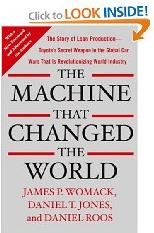
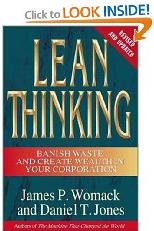
 In Search of Excellence : Lessons from America's Best-Run Companies
 The Fifth Discipline : The Art and Practice of the Learning Organization
 Assessing Business Excellence : A Guide to Self-Assessment
 The Benchmarking Workbook: Adapting the Best Practices for Performance Improvement
 Value Engineering : Practical Applications...for Design, Construction, Maintenance & Operations
 World Class Manufacturing - The Next Decade : Building Power, Strength, and Value
 Implementing World Class Manufacturing - Shop Floor Manual
 Engineering Management : Creating and Managing World-Class Operations
 Reinventing the Factory II : Managing the World Class Factory
 The New Shop Floor Management : Empowering People for Continuous Improvement

 One-Piece Flow : Cell Design for Transforming the Production Process
 Integrating Kanban With MrpII : Automating a Pull System for Enhanced Jit Inventory Management
 Customer Integration : The Quality Function Deployment (Qfd) Leader's Guide for Decision Making
 The 5 Pillars of Tqm : How to Make Total Quality Management Work for You
 Guide to Quality Control
 Beyond Tqm : Tools & Techniques for High Performance Improvement
 Handbook of Quality Tools : The Japanese Approach
 Continuous Improvement in Operations : A Systematic Approach to Waste Reduction
 Continuous Process Improvement : Simplifying Work Flow Systems
 Business Process Improvement : The Breakthrough Strategy for Total Quality, Productivity, and Competitiveness
 Ten Tools for Quality : A Practical Guide to Achieve Quality Results
 40 Top Tools for Manufacturers : A Guide for Implementing Powerful Improvement Activities
 101 Creative Problem Solving Techniques : The Handbook of New Ideas for Business
 Lateral Thinking : Creativity Step-By-Step
 The Art of Thinking : A Guide to Critical and Creative Thought
 Six Thinking Hats
 40 Tools for Cross-Functional Teams : Building Synergy for Break Through Creativity
 Team Decision-Making Techniques : A Practical Guide to Successful Team Outcomes
 The Reengineering Revolution : A Handbook
 Beyond Reengineering : How the Process-Centered Organization Is Changing Our Work and Our Lives
 Design and Management of Service Processes : Keeping Customers for Life