This Web Site in English Sito Web in Italiano
Carlo Scodanibbio - Industrial Consultant
 

world class performance in the SME

world-class philosophy and culture The world has changed. Dramatically. Irreversibly. The world continues to change, at a higher and higher speed... The rules of the game have changed - once and forever. There is a keyword, representative of this change: the keyword is complexity. Complexity has a dramatic impact on the productive system. Understanding the change and learning to deal with complexity are primary requirements for enterprises willing to aim at higher levels of performance. ......we have gone into the new millennium with organisational systems, principles and methods conceived over two centuries ago and perfected in the last century to perform well in the "previous" world, a "static", "predictable" world, the world before the change.... Those systems, principles and methods are no longer adequate to face the challenges imposed by the "new" world. Enterprises aiming at high levels of performance need to structure a new culture rotating around a key concept, a concept somehow "lost" in over a century of industrialisation. This key concept is value. Value Management and Value Adding Management are the pilot light for World-Class Performers, their guiding philosophy. The Value philosophy includes and is based on: Vision and Mission: the "big-bang" to performance enhancement (--> more) The Learning Organisation approach: understanding the change and instilling the culture of continual learning and change management in personnel at all levels (--> more) The Value Chain principle: identification, understanding and ethical exploitation of the "value-chain" (--> more) Opportunities Management: systematic, creative search for Opportunities, targeting at maximising value transmitted all along the "value-chain" (--> more) Orientation to Client as strategic key to performance improvement (--> more) Process Engineering: identification and understanding of critical core and support processes, and engineering of processes to maximise their output value by minimising/eliminating waste of any nature and entity (--> more) Continuous Performance Improvement: step-by-step (Kaizen style), continuous, systematic improvement of all critical processes, in a path to excellence (--> more) Guided by Value Management and Value Adding Management principles, Enterprises can prepare and mix the main ingredients of the World Class Performance formula. top world-class approach to market and clients Everything has changed: the political, social, economical, technological and informational domains are all affected by change. A relevant phenomenon - very representative of the change - is the clients' transformation. After the world has changed, clients have become monsters. Monsters are never satisfied. They want more and more, day after day. Clients are human beings, like me and you. Human beings, after the world changed, are never fully satisfied: they want more and more, in a continuous strive for a better quality of life. The cultural change has reached any remote corner of this world, and has highlighted the importance of life's quality to all human beings. We all want more and better, according to our principles and beliefs. Also monster clients do want more. Clients want what they want, when they want, at the rate they want, with the features they want.... What monster clients want, after all, is just pure, abundant value. Value they can touch and perceive as valuable. Value in line with their principles and concepts of value. Enterprises aspiring at world-class status need to understand fully the way Clients have changed, and act accordingly. The starting point is knowing the market and knowing clients. Not through a market survey or a clients survey. Much more than that is required. As often happens, SMEs do not have the necessary resources (human and financial) to achieve a deep knowledge of the market. Still, SMEs need to set up a simple but effective strategy addressed to an intimate knowledge of the market in which they operate or intend to operate, by which everybody in the enterprise contributes to understanding and learning - listens to strong and faint signals originating from the market - identifies potential threats and opportunities - and acts accordingly. All gathered inputs need to be structured organically and rationally. A number of questions need to be answered (--> more). Phenomena need to be qualified and quantified. Significant data have to be identified and classified. From which strategic information needs to be elaborated at operational/decisional level. Eventually, the SME needs to set-up a personalised, dynamic strategy for its global approach to the market. Corporate principles, values, beliefs and symbols - harmonically homogenised - need to be identified and established/diffused (--> more) The SME image parameters need to be identified, consolidated, perfected, and then continually supported (--> more) A corporate communication strategy needs to be established and diffused at all levels. Its relevant features and methods need to be understood and shared by everybody (--> more) The Enterprise's industrial culture starts being set. (--> more) In its global approach to clients, the SME needs to establish a core paradigm: the client is the key. Old-world mottos such as "...clients cannot make up their mind...", "...clients don't know what they want...", "...clients are full of nonsense...", or "...clients are only able to mess up our programs..." (to mention just a few) need to be replaced by a simple new-world motto: "...clients are our partners in a venture aiming at reciprocal success...". The world-class SME needs to become client-driven and has to set up a number of core, operational principles, shared by everybody: Know the Client (--> more) Listen to the voice of the Client (--> more) Maximise Clients' satisfaction (--> more) Manage Clients' expectations (--> more) Aim at very high standards (--> more) Facts rather than words (--> more) In the client-driven Enterprise, everybody knows the client and everybody is able to relate his/her own work to the client. From being an external or immaterial entity, Clients become part of everybody's "area of purpose". Everybody knows how to listen to the voice of the client, and everybody knows how to gather significant inputs, for onward processing. All gathered inputs need to be structured organically and rationally. A number of questions need to be answered (--> more). Phenomena need to be qualified and quantified. Significant data have to be identified and classified. From which strategic information needs to be elaborated at operational/decisional level. The concept "...every Enterprise is today a Service Enterprise...." - serving the monster client - is established and diffused at all levels. The Enterprise's main output is always service, irrespective of the industrial sector (manufacturing, project...) to which it belongs. The relationship with clients tends to become mature, adult. The monster starts losing its monstrous features, returning gradually to be a normal human being.... The value-chain concept is extended inside the Enterprise, in a continuum of internal and external supplier/client relationships, all governed by the same client-driven key principles. (--> more) The Enterprise's industrial culture becomes solid, strong, shared, lived. top world-class products and services Monsters like variety and undivided, personal attention: like to say, variety of food and personalised food. Today, monsters may be happy with some spaghetti, but tomorrow they want tortellini. And the day after a full Italian antipasto, and lasagne, and veal pizzaiola. And.... isn't it ? The new-world SME must approach the market with products and, most important, service capable of fulfilling market's wants and expectations in a competitive mode. Competitive advantage in the new-world is obtained through a world-class approach to the development of new products/services - to the modification/adaptation of existing ones - to the personalisation required by the monster clients. This requires an enterprise in the Enterprise, the new products/services enterprise. A factory in the Factory, the new products development factory. A service establishment in the Service Establishment, the new services development unit. In most cases, the traditional R&D department is no longer adequate. Besides, the world is changing rapidly. New products and services must be developed as rapidly. Products' lifecycle becomes shorter and shorter. In a situation of proliferation of similar/identical products all launched almost at the same time, being first on the market carries a distinct advantage. Moreover, monsters are less and less likely to tolerate poor shows or failures. Products/Services must be right, from day 1. Capable of assuring immediately monsters' satisfaction and acceptance. Finito. Repairs/intervention under guarantee and after-sale service are fast becoming an obsolete concept. Errors, mistakes, unreliability are no longer acceptable to monsters, who are less and less prepared to subsidise poor-performing enterprises. The new-world rules are tough. There is no space for amateurs.... The world-class SME should adhere to a couple of rules and set a couple of corresponding targets, in order to face the tough challenge: New products/services (or modified/adapted ones) must be right from day 1. This means "valuable" to clients and fully acceptable to them, immediately. Be first on the market - ideally, well ahead of competition. This means sur-peting rather than competing. (--> more) The above implies a global approach and a well defined strategy in respect of new products/services development. Most probably, not confined only to the traditional R&D people. New products development starts at clients' premises and ends at clients premises. Only a closed loop of this kind can guarantee some success. The state-of-the-art disciplines available to the SME for the purpose include (but are not limited to) the following ones: QFD - Quality Function Deployment. Or, "...listen to the voice of the clients and convert their declared, expressed, implied, expected and even un-expected wants, needs, demands and wishes into quality features/characteristics of the new product/service - already at drawing board stage - so that the new product/service will be acceptable and valuable from day one....." (--> more) VE - Value Engineering. Or, "....an organised way of thinking to examine all the cost components of a product (or service, or system) in order to determine whether any cost item can be reduced or eliminated without detracting its functional, quality or aesthetic elements......". (--> more) VA - Value Analysis does the same as Value Engineering, but for existing products/services. Through Value Analysis and Value Engineering, the Value Management philosophy throws its shining light also on the product/service development domain. FMEA - Failure Mode and Effects Analysis. Or, ".....an analytical technique addressed to identify - already at design stage - critical areas or potential sources of failure in products or services (or processes), including the possible failures that might be incurred during the Design, the Development, and the Production of a Product (or the Processing of a Service) or its components and sub-components (or its processes and sub-processes) - and also addressed to evaluate the potential effects of such failure/s, ranking them in order of relevance - and providing a system for defining what actions (modifications, tests and controls, etc.) could and should be undertaken in order to eliminate or reduce the probability of such failure/s taking place....". There is a Product FMEA, a Process FMEA and a Service FMEA. (--> more) FTA - Fault Tree Analysis. Or, ".....a thinking process apt to identify all sort of possible actions and interventions addressed to reduce (if and when required) the risk associated with an undesired outcome. This is achieved by analysing what events have to conspire together to bring about the undesired outcome. ...". The FTA tool is extremely useful to assess and counteract, already at Design stage, possible risks associated with the use of a Product - or the production of a Product - or the Processing of a Service - or the implementation of a Project - etc. The FTA tool can be conveniently used in conjunction with other Risk Management tools like the Event Tree Analysis, the Cause-Consequence Modelling & Analysis, the Markov Chain Analysis, and others. DOE - Design Of Experiments. Or, ".....how to target at zero defects and beyond (toward zero variation) already at Product Design stage, by identifying and separating important quality variables from unimportant ones and optimising and freezing levels and tolerances on important quality variables of a product....". Concurrent (Simultaneous) Engineering. Or, ".....how to avoid the "over-the-wall" approach to product/service development (long, costly and ineffective) by switching over to "parallel", interfunctional-team development of products/services. The deployment of the above disciplines (and others) does not guarantee alone a fast, economical and effective product/service development process. To the contrary, it might even penalise a "traditional" approach, because of the introduction of a stronger cost and time impact. Only a well co-ordinated, "concurrent" team work maximises effectiveness (product/service right from day 1) while minimising development costs and time. (--> more) Project Management. In a concurrent, team-development situation, solid and healthy Project Management is imperative. Practically unknown in the Manufacturing and Service Enterprise (especially in SMEs), Project Management rules and principles assure success, efficiency and effectiveness in the development process of new products or services. (--> more) The final target for the world-class SME: the Total Product and/or Total Service. Or, "...give the monster a bit more than what he wants or expects if you want to assure his full satisfaction.....". top world-class operations Eventually, lunch time comes and the monster must be fed. Manufacturers must give products (and service) to their monster clients. Project-driven enterprises must give the object of the project (be it a dwelling, a ship, a bridge or the soft furnishing of a conference centre....) - again with adequate service - to their monster client. Service Establishments must feed services (a travel booking, or an insurance policy or providing an internet connection....) to their monsters. Products, objects of projects and services have to be processed operationally until they are output. The principles, the core concepts and the philosophy governing "operations" of any nature are absolutely identical in the three main industrial sectors (Manufacturing - Project - Service): monsters want their food with the right quality, at the right time at the right price (the 3 main operational parameters), and with a smile on top (as cherry on the cake....). And something else. Like to say, once again, they want value. The output value of a processing operation cannot exceed (it seems obvious) the value inherent in that operation and generated by that operation. As a consequence, processing operations come under close scrutiny: as the target is to maximise output value, considerable care has to be taken to ensure that value is actually generated during processing. Processing may generate value (the famous added-value) but, unfortunately, may also generate something else (non-value), or too little value in relation to the available time or to the associated cost. This phenomenon influences directly product's/service's worth (as perceived by the monster) and product's/service's cost (to the supplier) and, consequently, price to the monster client. Monsters are extremely intelligent. After the world changed, they have become very skilled in creating immediate relationships between product/service worth and its associated price. If there is a match, there is satisfaction. If there is a mismatch, there isn't enough. The monster then becomes a monstrous monster... (--> more) ....after the world changed, monsters decided to stop giving any subsidy to their food providers..... The net conclusion is that world-class SME must be extremely careful to all items of non-value or to insufficient value output by their processing operations. The Value Adding Management philosophy comes to the rescue again, and gives brilliant, shining light to Enterprises willing to jump to higher levels of operational performance: processing operations must produce only pure, adequate value. All the rest is non-value, or, called with its true name, waste. The practical criterion is extremely simple: whatever adds to cost without adding to output value is to be looked at very suspiciously. Most probably it's just pure waste. Systematic Elimination of Waste (SEW) of any nature and entity is the primary target of SMEs aiming at world-class operations. All the Operations-related disciplines rotate around this very principle. The World-Class Operations formula is theoretically identical for the 3 main industrial sectors. We should focus onto: The INDUSTRIAL CULTURE AREA. Once again, Value Adding Management is the pilot light, well supported, operationally, by the SEW - Systematic Elimination of Waste discipline. (--> more) The PROCESS AREA. This is the heart of Operations of any nature. The focus is on Process' efficiency. The world-class target is very simple: Total Productivity. Meaning: high efficiency of processes (maximising outputs while minimising all associated costs - drastic reduction of all lead-times - high flexibility and reactivity to clients' requirements. The state-of-the-art disciplines available to SMEs to manage the Process Area are different for the 3 main industrial sectors (see below). The PRODUCT/SERVICE AREA. The focus is on Process' effectiveness. The world-class target is very simple: Total Quality. Meaning: 100% effectiveness - zero defects/zero errors - total conformity. The state-of-the-art discipline available to all SMEs to manage the Product/Service area is still TQM - Total Quality Management. However, this discipline is to be developed/adapted to face the new millennium challenges. (--> more) The PLANT AREA. The focus is on Plant, Machinery, Equipment and, in general, Technology "overall performance". The world-class target is very simple: Total Plant Performance. Meaning: maximisation of efficiency and effectiveness of all technology components associated with operational processing - optimisation of technology utilisation - elimination of all technology-related losses (waste). The leading state-of-the-art discipline available to all SMEs to manage the Plant/Technology area is still TPM - Total Productive Maintenance, developed/adapted to suit the new millennium challenges. (--> more) The PEOPLE AREA. People make the difference between success or failure of any enterprise. The focus is on personnel performance. The world-class target is again very simple: TEI - Total Employee Involvement, and, where applicable/feasible, TEP - Total Employee Performance. Meaning: only when enterprise's people accept responsibly and actively the challenges of the new-world; and tackle with effort and hard, creative thinking their daily confrontation with reality; highly involved in processes they understand and own; contributing actively to improve those processes' output value; well satisfied in doing so; only under these circumstances can an enterprise aim at high levels of operational performance. (--> more) You may view my architectural interpretation of the World-Class Operations formula by clicking here. In practice, the World-Class Operations formula is slightly different for the 3 main industrial sectors, because different disciplines are suited to govern their PROCESS Areas. In detail: MANUFACTURING INDUSTRY. The state-of-the-art discipline available to Small and Medium Manufacturing Enterprises to govern their Process Area is Lean Manufacturing. Lean Manufacturing is the operational arm and the core discipline of the World Class Manufacturing philosophy and approach. Lean Manufacturing means: manufacturing without waste. (--> more) Lean manufacturing is based on/supported by a number of allied disciplines, which include Cell Manufacturing (--> more) and Achieving Quick Change-Over (--> more) You may view my architectural interpretation of the World-Class Manufacturing Operations formula by clicking here. PROJECT-DRIVEN INDUSTRY. The state-of-the-art discipline available to Small and Medium Project-driven Enterprises to govern their Process Area is Lean Project Management. Meaning: producing project objects without waste. (--> more) Lean Project Management is based on/supported by a number of allied disciplines. You may view my architectural interpretation of the World-Class Project Operations formula by clicking here. SERVICE INDUSTRY. The state-of-the-art disciplines available to Small and Medium Service Enterprises to govern their Process Area are PIM - Process Improvement & Management and PR - Process Re-engineering. Both fall under the Process Engineering umbrella, and both are addressed to govern the output of services with minimal/nil waste. (--> more) You may view my architectural interpretation of the World-Class Service Operations formula by clicking here. top e-performance A new breed of monsters has developed and grown in recent years: e-monsters. They are not so different from traditional, real-world monsters - their main features are rather similar. Still, they want special, different food, and special attention and care. With the advent of the New Economy (the e-Economy) enterprises face new challenges and need to align with new paradigms.(--> more) World-class enterprises have no difficulty in adapting to yet new rules of the game: the learning organisation approach allows them to understand the core principles of the E-Economy fast and react accordingly. Whereas traditional, old-world enterprises are presented with another burden to bear and another gap to fill... The Internet Economy is a major parameter of the world's change. Its impact has been rather "silent" and goes still un-noticed today. In spite of that, enterprises are given clear warnings: "...we are going through a revolution that we cannot stop nor control - we can only join it and try to govern it somehow....". The Net Economy, totally decentralised, is a dominant force that will determine the next ten years and will change societies, cultures, and politics in the entire world. It will create explosive opportunities and great fortunes for many - passions, fears and threats for many others. In this e-world scenario, prosperity will only come from extreme flexibility and continuous adaptability.
all Industries
Lean Kaizen for Continuous
Performance Improvement
".........in a rapidly changing world, featuring vanishing borders and hot, global competition, all Enterprises, including Small and Medium Enterprises (SME), can and should today perform operationally as the "best in the classroom" by adopting a simple, lean formula: to be deployed with an integrated approach......."
main ingredients of the world class performance formula
 diamondWorld-Class Philosophy and Culture (Lean Culture)  diamondWorld-Class approach to Market and Clients
 diamondWorld-Class Products and Services  diamondWorld-Class Operations (Lean Operations)
 diamonde-Performance: World Class Performance in the e-Economy

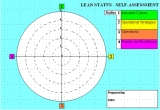
How "lean" is your organisation?
new e-course How far is your enterprise from "lean"? Download your free
Lean self-assessment questionnaire
e-Courses now available!!
new e-course 3 e-courses are now ready!
More will be available soon
Get them now - clickhere
Free evaluation of your TPM status
How far is your factory from TPM targets? Download your free
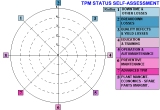
TPM self-assessment questionnaire
Free Online Consulting
The first service is free to all SME
and to all participants in my courses
Get it now - clickhere

 
http://www.scodanibbio.com
Please report any malfunction of this Web Site toWebMaster

Visit also the following Web Sites which are all related to Carlo Scodanibbio activities:
http://www.modus2000.com
http://www.modus2000.com/webbuild
http://www.modus2000.com/webmaster
http://webbuildcourse.tripod.com
http://www.cpd.uct.ac.za/wcp